What Do Blue Hearts Mean in Text? Meaning, Uses & Real Examples (2026)
Getting a blue heart in a text can feel confusing. You may wonder if it’s romantic or just friendly. Your friend, partner, or crush might send it without much thought. But the color still carries its own message. That’s why so many people search to understand what blue hearts mean in text.
Unlike the red heart, blue doesn’t scream romance. It feels calmer and more steady. It often points to trust, comfort, or loyalty instead of passion. This guide breaks down what blue hearts mean in text, where people use them most, and how to reply the right way.
What Do Blue Hearts Mean in Text?
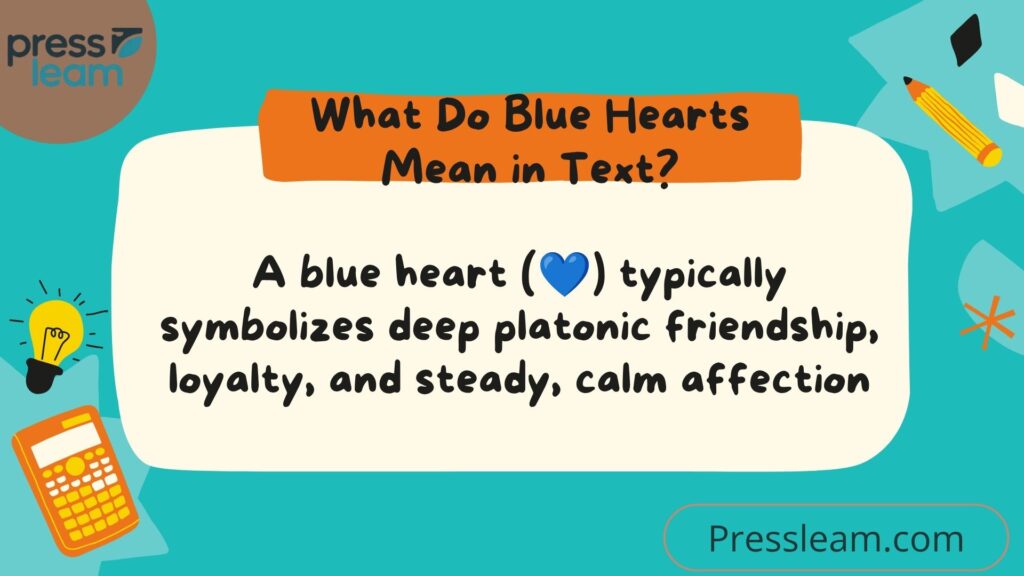
When someone sends you a 💙, they’re usually expressing trust, calm affection, or loyalty rather than passion. Blue hearts mean in text something closer to a warm, dependable connection than a romantic spark. It’s the emoji version of saying “I’ve got you” or “I appreciate you” without adding pressure.
The color blue itself plays a big role here. Blue is linked to calmness, stability, and honesty in color psychology, which is exactly why the emoji feels safer and less intense than red or pink hearts.
Main Interpretations:
- Trust and loyalty: Sent to someone who’s proven reliable over time
- Platonic love: Common between close friends, especially guy friends
- Calm support: Used to comfort someone going through a hard time
- Admiration: Shows respect without romantic intent
- Team or fandom pride: Used to show support for a group, brand, or cause tied to the color blue
Where Are Blue Hearts Commonly Used?
Blue hearts mean in text different things depending on the app and the crowd using them. Some platforms lean casual and friendly, while others use the emoji to build a brand identity or show community support.
Popular Platforms:
| Platform | Common Use |
| Comments, captions, close friend stories | |
| TikTok | Comment sections, fan support |
| Snapchat | Friend chats, streak messages |
| Family group chats, casual texts | |
| Discord | Gaming communities, server bonding |
| X (Twitter) | Fan pages, team support posts |
Tone & Style:
Blue hearts read as gentle, low-pressure, and sincere. They fit casual conversations, supportive replies, and captions where a red heart would feel too intense or too romantic for the moment.
Examples of Blue Heart in Conversation
Real examples make it easier to see how blue hearts mean in text something steady rather than flashy. Here’s how people actually use the emoji day to day.
- “Thank you for always showing up for me 💙”
- “Miss our late night talks, love you bro 💙”
- “Proud of how far you’ve come 💙”
- “Sending strength your way today 💙”
- “We’re always a team, no matter what 💙”
Each example shows support, appreciation, or loyalty rather than a romantic push. That’s the pattern behind almost every casual blue heart text.
When to Use and When Not to Use Blue Hearts
Knowing when to send a blue heart avoids awkward mixed signals. Since blue hearts mean in text something calmer than red hearts, they work best in specific emotional situations.
When to Use Blue Heart
- Comforting a friend after a rough day
- Thanking someone for their support
- Showing loyalty to a friend group or team
- Replying to good news from someone you’re not dating
- Supporting a cause, charity, or fandom linked to blue
When Not to Use Blue Heart
- When you want to clearly express romantic interest
- Right after a first date, since it can feel unclear
- In professional or workplace messages
- When the other person already reads hearts as flirty from you specifically
Other Meanings of Blue Hearts
Outside of everyday texting, blue hearts mean in text or online content something broader depending on the setting. Awareness campaigns often use the color blue to represent causes like autism awareness or child abuse prevention. Sports fans use it to show loyalty to a team with blue colors. Some online communities even use it as a subtle inside symbol between members.
Context always decides the real meaning, so the safest move is checking who sent it and what the conversation was about before assuming anything deeper.
ALSO READ THIS BLOG: What Does OOO Mean in Text? Meaning, Uses & Real Examples (2026)
Similar Emojis or Alternatives
Other heart colors carry their own tone, and comparing them helps explain why blue hearts mean in text something different from the rest.
| Emoji | Common Meaning |
| Red Heart | Romantic love, passion |
| Pink Heart | Sweetness, cute affection |
| Yellow Heart | Friendship, happiness |
| Green Heart | Nature, jealousy jokes, growth |
| Light Blue Heart | Calm, peace, gentle friendship |
| Black Heart | Dark humor, edgy affection |
Why People Use Blue Hearts in Texting?
Blue hearts mean in text a feeling that other colors don’t quite capture. Here’s why the emoji has become such a popular choice.
Shows Trust and Loyalty
The blue heart signals a bond built on reliability rather than excitement. It tells someone “you can count on me” without needing extra words.
Works for Friends and Family
Since it avoids romantic weight, the blue heart fits texts to parents, siblings, and close friends without any confusion about intent.
Casual & Relatable
Blue hearts feel easygoing. They fit naturally into everyday chats, group messages, and quick replies without feeling overly emotional.
Social Media-Friendly
Brands, creators, and fan accounts often use blue hearts because the tone feels approachable and trustworthy rather than personal or flirty.
Flexible Tone
A blue heart can shift slightly based on context, working for comfort, celebration, gratitude, or light affection all at once.
Is the Blue Heart Romantic or Platonic?
This is the biggest question people search for, and the honest answer is that it depends heavily on context. Blue hearts mean in text mostly platonic or calm feelings, but there are exceptions worth knowing.
Friendly
Most of the time, a blue heart between friends is simply a way to say thanks, show support, or express appreciation with zero romantic intent.
Neutral
Some people use blue hearts as a safe, low-key way to respond to compliments or good news without committing to a stronger emotional tone.
Light Romantic
In early-stage dating or flirty conversations, a blue heart can hint at interest while staying more reserved than a red heart would.
Conclusion
Blue hearts mean in text something calmer and steadier than most people expect. They lean toward trust, loyalty, and platonic affection far more often than romance.
Reading the full conversation, the platform, and the relationship behind the message is always the best way to understand what someone really meant when they hit send on that .